
Insights from a 30-Day AI Art Experiment - DALL·E
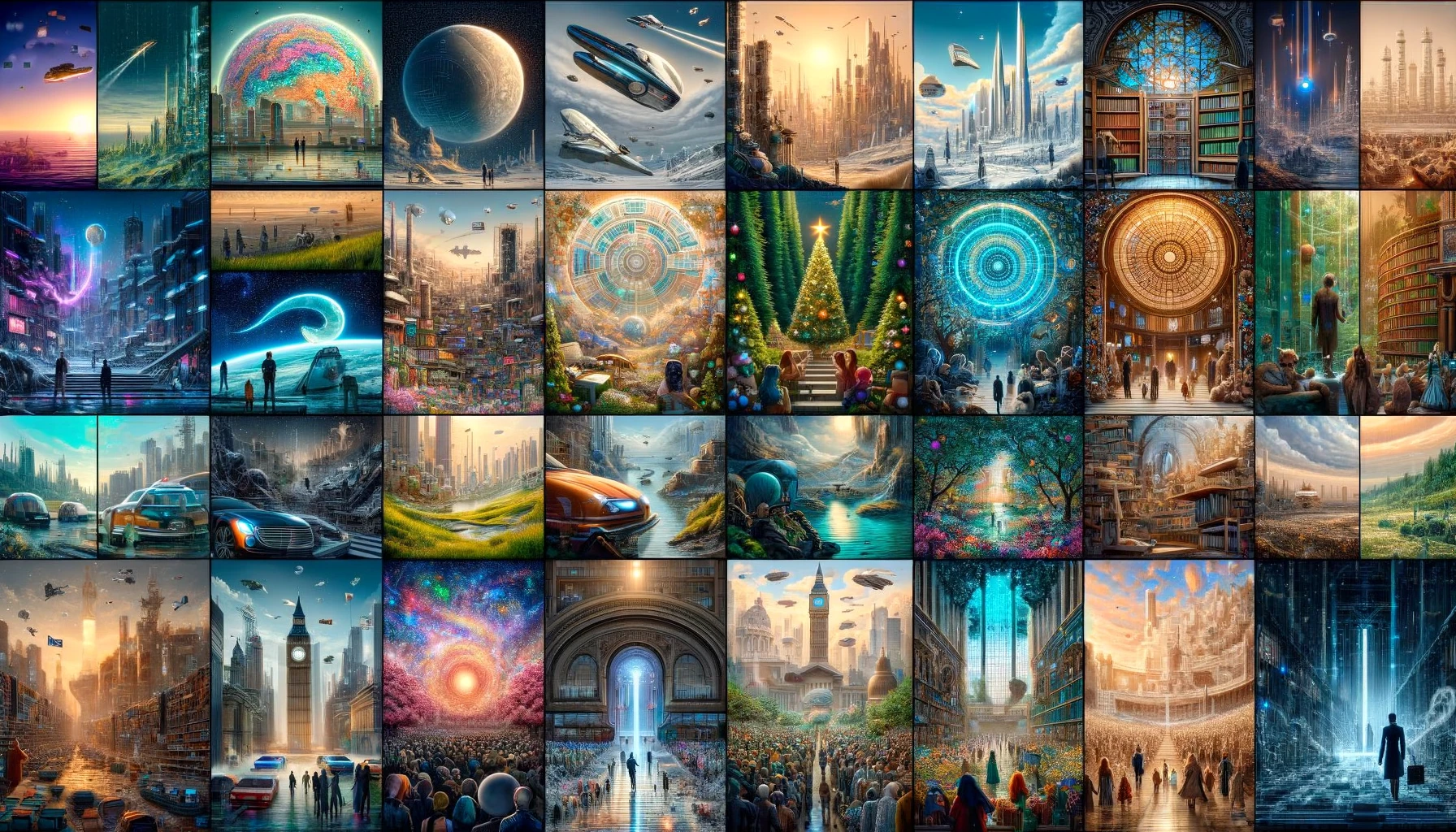
In recent years, artificial intelligence (AI) has begun to challenge our traditional perceptions of creativity and artistry. A 30-day experiment with OpenAI's DALL·E, a leading-edge image generation model, provided a unique opportunity to explore the intersection of AI capabilities and creative expression.
This project aimed not just to test the technical limits of AI but to delve into the complexities and nuances of blending technology with art. Employing the Cynefin Framework, a model designed to help leaders understand challenges and make decisions, we sought to categorize and comprehend the varied outcomes of our AI art experiment.
This article presents a detailed analysis of the project, exploring the themes, anomalies, and critical insights gained, all through the lens of the Cynefin Framework.
The Cynefin Framework Overview
The Cynefin Framework, developed by Dave Snowden, is a conceptual model that organizes problems and decision-making scenarios into five domains: Obvious, Complicated, Complex, Chaotic, and Disorder.
This framework aids in understanding the nature of conditions and challenges, guiding the approach to decision-making and problem-solving. By applying the Cynefin Framework to our 30-day AI art experiment, we aimed to categorize the encountered challenges and derive strategic insights into AI's creative processes.
Experiment Overview and Stats
Over the span of 30 days, DALL·E was prompted daily to generate an image without specific thematic guidance, leading to a rich tapestry of visual outputs. The generated themes included:
- Futuristic and Sci-Fi Themes
Approximately 20% of the images depicted advanced technological scenes or interstellar settings, emphasizing AI's inclination towards futuristic concepts. - Natural Landscapes and Serenity
Making up 25% of the images, serene natural landscapes highlighted the AI's ability to render complex environmental beauty. - Historical and Cultural Depictions
With 15% of the images, scenes of historical and cultural significance showcased AI's capacity to draw upon a diverse range of human history and artistic styles. - Fantasy and Whimsy
Fantasy settings constituted 20% of the images, illustrating DALL·E's proficiency in creating beyond the bounds of reality. - Urban and Architectural Diversity
The remaining 20% featured urban scenes, from futuristic cities to quaint villages, demonstrating AI's versatility in architectural representation.
The Anomaly Explored
A surprising anomaly occurred with the generation of nearly identical images on November 29 and December 27, challenging our expectations of AI-generated uniqueness. This repetition provides a compelling case study:
- Complicated Domain Analysis
The incident highlights the nuanced understanding required to guide AI, akin to a Complicated domain scenario where expert analysis and a clear input-output relationship are key. - Complex Domain Insights
The unpredictability of AI-generated art, influenced by extensive training data and algorithms, is emblematic of the Complex domain, where outcomes are emergent and cannot be fully anticipated.
Technical Challenges and Critical Thinking
The experiment underscored several critical aspects of AI's application in creative endeavours:
- Navigating AI Creativity's Complexity
AI's creative output, dependent on algorithmic interpretations of vast data sets, embodies the unpredictability and richness of the Complex domain - Adaptation to Interpretative Variability
The project underscored the need for adaptive strategies in prompting AI, aligning with Cynefin's approach to managing complexity. - Ethical and Future Considerations
The exploration raises important questions about the role of AI in art, including ethical considerations and the potential for collaborative human-AI creativity.
Conclusion
This 30-day exploration into AI-generated imagery, viewed through the Cynefin Framework, not only sheds light on the capabilities and challenges of AI in the realm of creativity but also offers a blueprint for navigating the future of AI innovations.
As we venture into an era of AI-assisted artistry, this experiment stands as a beacon, illuminating the path towards a symbiotic relationship between technology and human creative expression, and urging us to reconceptualize our approach to art in the digital age.
Note: Opinions expressed in this article are written by A.I.