
Why Posting on Social Media Means Licensing Your Expertise Away
Most professionals assume they “own” the content they publish online.
Legally, that is correct. Strategically, it is incomplete.
When you publish on a social media platform, you retain copyright. But at the same time, you grant the platform a broad licence that allows it to use, distribute, modify, and monetise your content without further permission or payment. The distinction between ownership and control is where the real risk sits.
That difference rarely features in marketing advice about building a personal brand. Yet it should.
Copyright and Platform Licences Explained
Before going further, clarity matters.
Copyright means you remain the legal author of your work. You can prevent unauthorised third parties from copying or republishing it without consent.
A platform licence, however, is a contractual permission you grant when you accept the platform’s terms of service. That licence typically gives the platform the right to:
- Use and reproduce your content
- Modify it or create derivative works
- Distribute it globally
- Sub-license it to partners
- Use it in advertising
- Incorporate it into machine learning or AI systems
These licences are usually non-exclusive, worldwide, transferable, and royalty-free.
You still own the copyright. But the platform gains wide discretion over how your work is commercially used.
That is not theft. It is contract law.
Major platforms such as LinkedIn, Facebook, Instagram, X, TikTok and YouTube operate under variations of this structure.
The legal mechanism is consistent across the industry.
The Subtle Shift from Ownership to Control
The practical effect is not immediately visible.
You post an article. It performs well. You gain engagement. Your authority appears to grow. Nothing feels compromised.
But consider what has actually happened.
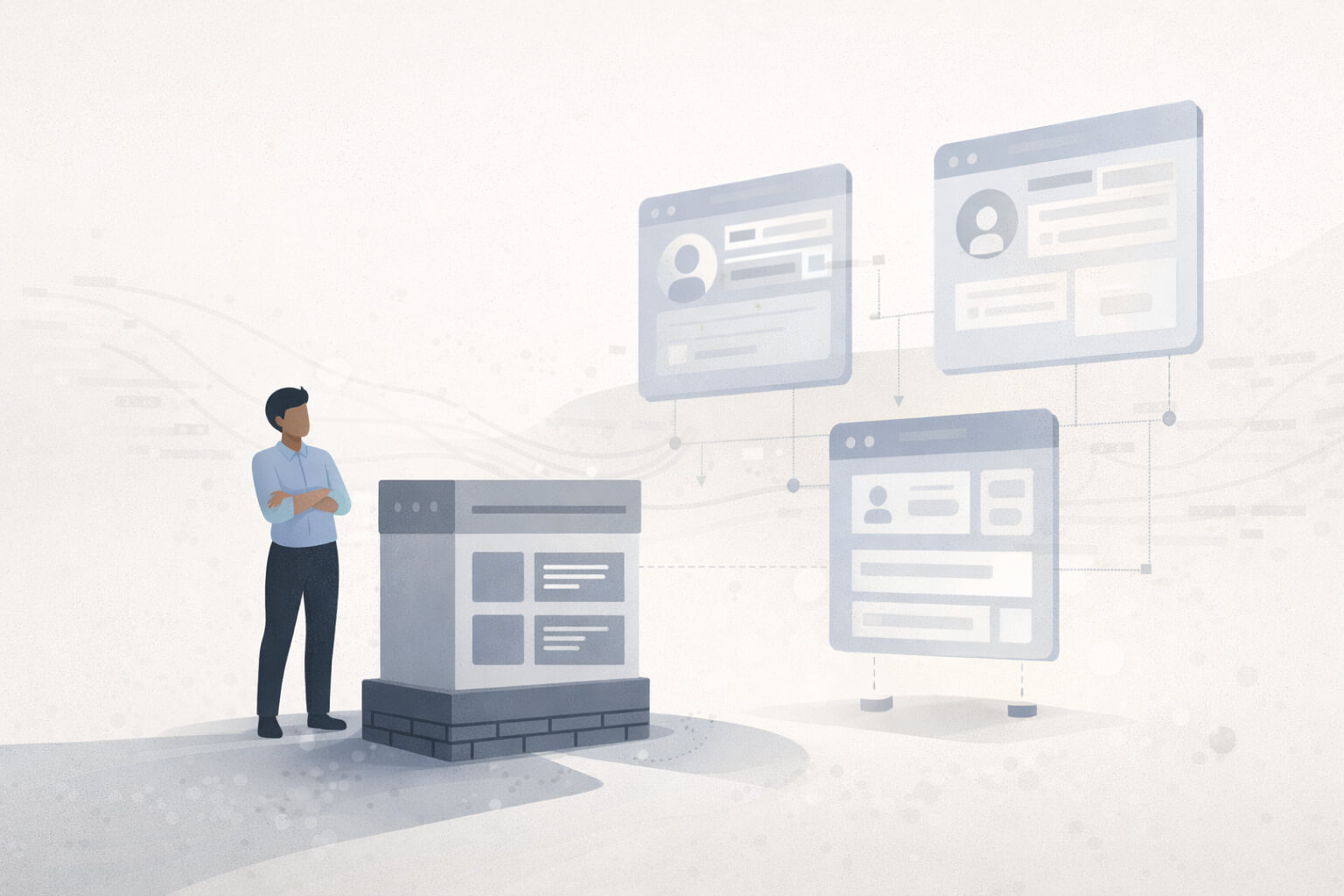
Your expertise now strengthens the platform’s domain authority, not your own. The search value accrues to their infrastructure. The engagement data remains in their analytics system. The distribution is governed by their algorithm.
You own the text.
They control the environment.
Over time, this distinction compounds. A decade of publishing exclusively on social media does not build a durable asset. It builds audience dependency.
That dependency is rarely acknowledged because it feels productive in the short term.
AI Training (LLMS) and Derivative Use
One of the more recent developments is the inclusion of language permitting use for machine learning and artificial intelligence systems.
This means your frameworks, commentary, and analysis may contribute to improving platform features or automated systems. Those systems may then be monetised independently of you.
The licence you granted allows this.
You may never notice the effect directly. The impact is structural rather than visible.
Ownership remains intact. Exclusivity does not.
The Illusion of Permanence
Deleting a post does not always eliminate its footprint. Platforms retain copies for operational, archival, and legal purposes. Derivative content already created may continue to circulate.
More importantly, the relationship itself is revocable.
Accounts can be restricted. Policies can change. Visibility can be reduced.
The licence remains binding regardless of distribution outcomes.
This is the imbalance few professionals examine. The platform’s rights are stable. Your reach is conditional.
Why “Doing Both” Often Fails
It is common to argue that there is no issue because professionals can publish on their own website and on social media simultaneously.
Technically, that is correct.
Behaviourally, it rarely works that way.
Immediate engagement creates incentive. Deep publishing requires discipline. The platform rewards frequency and reaction. Owned infrastructure rewards depth and patience.
Over time, creative energy gravitates toward the environment that produces faster feedback.
Without intention, distribution platforms quietly become primary storage.
Reframing Social Media as Distribution
The problem is not social media itself. It is misunderstanding its role.
Social platforms are powerful tools for:
Discovery. Conversation. Testing ideas. Audience expansion.
They are not designed for long-term intellectual asset control.
The shift required is simple but strategic:
Create on property you control. Distribute on platforms you do not.
This reframing transforms social media from primary repository to amplification layer.
Technical Mitigation and Ownership Discipline
Professionals who rely on intellectual property as part of their work should treat content publishing as an asset decision, not a casual action.
The first discipline is canonical publishing. Long-form articles, research, and structured frameworks should appear on your own domain first. Social media should reference, excerpt, or summarise — not host originals.
The second discipline is explicit licensing clarity. Clear copyright statements and defined reuse terms reduce ambiguity and reinforce ownership boundaries.
The third discipline is direct relationship building. Email lists represent permission-based access independent of platform algorithms. Followers are platform-governed. Subscribers are transportable.
The fourth discipline is structured AI governance. Declaring permitted AI usage, implementing llms.txt policies, and defining syndication agreements creates deliberate control rather than passive exposure.
None of these eliminate platform risk. They reduce dependency.
The Long Game
Careers increasingly depend on digital visibility. Yet visibility without control creates fragility.
- A profile can be suspended. An algorithm can change. A policy can expand without negotiation.
- A domain containing years of structured, searchable analysis compounds authority independently of those shifts.
The difference between the two paths is contractual, not emotional. You do not lose copyright when posting to social media. You license away significant control in exchange for distribution.
Understanding that exchange allows you to choose deliberately rather than drift into dependency.
Ownership in name is easy.
Ownership in practice requires structure.
Further thoughts…
If you create original analysis, frameworks, or thought leadership, ask yourself:
- Where is the primary version stored?
- Who governs the licence terms?
- Who captures the long-term search value?
- Who controls distribution?
The answers determine whether you are building an asset — or contributing to someone else’s.